From strip surface inspection to fully automatic packing — seven smart equipment series covering inspection, robotics, stirring, marking and packing drive the automation and unmanned operation of metallurgical processes.
Non-contact real-time inline inspection covering the full length and width of strip steel
Non-contact real-time inline inspection across the full length and width of strip steel improves line operating efficiency.
Multi-channel imaging across four fields of view — bright-field, dark-field, side-field and transmission — combined with stroboscopic imaging technology significantly raises the defect detection rate.
Decision-tree plus AI-based intelligent classification precisely identifies defects and provides online/offline analysis reports.
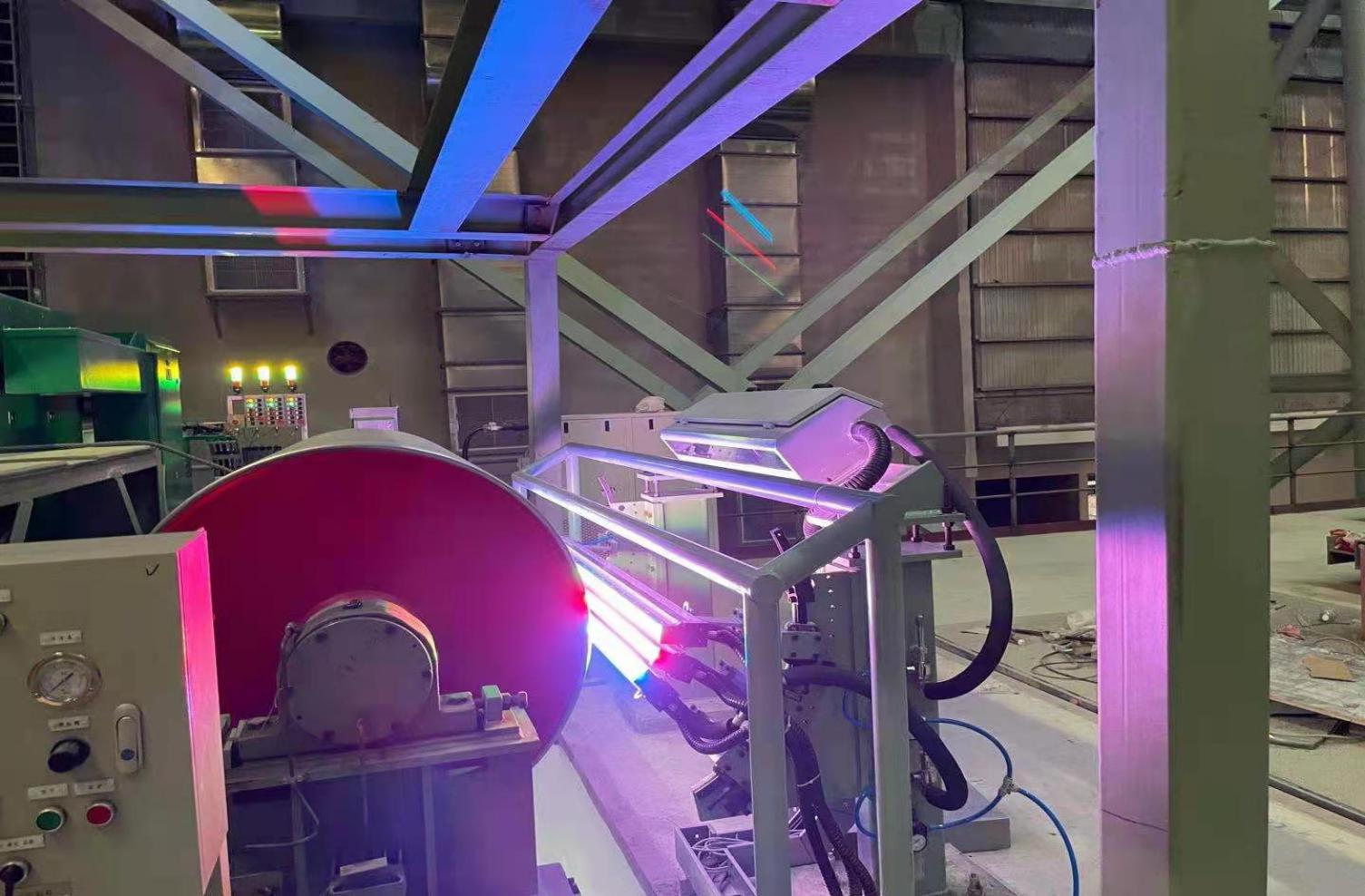
A high resolution of 100 μm × 100 μm leaves no subtle surface defect on strip steel undetected.
Four-field-of-view multi-channel imaging and AI classification achieve a defect detection rate of over 99%.
Decision-tree plus AI-based intelligent classification attains a defect classification rate of over 90%.
System availability of over 99.8% ensures stable line operation.
Widely applied across the steel industry to cold rolling, pickling, continuous annealing, coating lines and grain-oriented/non-grain-oriented annealing lines for electrical steel. It supports line speeds up to 1,000 mpm, improving operating efficiency through non-contact real-time inline inspection.
Track record: Over 260 units delivered, serving renowned enterprises such as Baosteel and Wuhan Iron & Steel. World-class technology in a mature, stable and reliable product.
Fully replacing manual sampling with efficient automation across the whole process
Automatic sampling robots deployed at the exit of rolling lines resolve the high labor intensity and safety risks of conventional manual sampling.
Sample panels cut from strip products are automatically located, gripped and transferred inline; specimen surfaces are automatically ground, marked and labeled so that specimens meet the required standard.
It handles panel transfer, storage, re-sampling lookup, specimen preparation and dispatch, linking with downstream quality inspection processes to ensure efficient, orderly specimen flow.
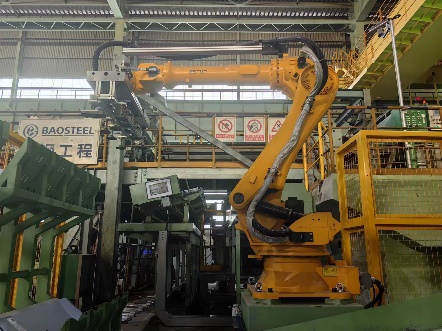
Each sampling cycle takes no more than 30 seconds, minimizing line downtime.
A sampling success rate of over 99.5% ensures reliable specimen collection.
High-precision positioning within 1 mm ensures accurate, reliable gripping and transfer of sample panels.
Annual downtime is kept within 40 hours; a high-availability design sustains stable production.
Panel pickup (inline auto-locating, gripping and transfer), panel processing (automatic surface grinding, marking and labeling) and specimen preparation (transfer, storage, re-sampling lookup, specimen making and dispatch) all run automatically as one integrated flow. It replaces high-load manual work, reduces safety risks and improves sampling and labeling accuracy.
Track record: Top-tier Chinese technology. Over 70 units delivered, serving renowned enterprises such as Baosteel and Maanshan Steel, with support for customized add-on functions.
Traveling-wave-field electromagnetic stirring improves the metallurgical quality of continuous casting
A magnetic field generator producing traveling-wave fields; its main products are the mold-type electromagnetic stirring equipment (M-EMS) and the strand-type electromagnetic stirring equipment (S-EMS).
Reduces defects such as subsurface inclusions, bubbles, cracks, center segregation, center porosity and looseness, improving metallurgical quality.
Suitable for continuous casting of billets, rounds, slabs and other sections.
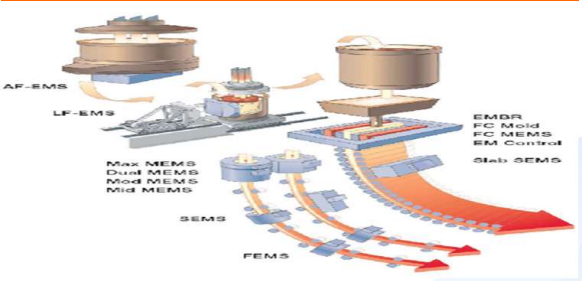
Rated current 600 A, rated voltage 380 V, frequency 3–7 Hz, three-phase (120° phase belt). Single-sided traveling-wave field combined with a rotating field.
The maximum magnetic flux density (RMS) at 15 mm from the MD copper plate is ≥ 600 GS, and the electromagnetic thrust at 15 mm is ≥ 29 N.
Rated current 500 A × 2, frequency 1–16 Hz, two-phase (90° phase belt). Roll-type traveling-wave field with a butterfly-shaped flow pattern.
With each pair of electromagnetic rolls spaced 230 mm apart, the center thrust is ≥ 110 mmFe.
It reduces subsurface inclusions, bubbles, cracks, center segregation, center porosity and looseness, improving metallurgical quality. Cooling: M-EMS uses water-cooled copper-tube windings (Class H insulation), while S-EMS uses externally water-cooled flat-wire windings (Class F insulation). Suitable for billets, rounds, slabs and other continuously cast sections.
Track record: Over 100 units delivered cumulatively since 2009.
Automating the entry process of cold rolling lines, with a closed loop from unbundling to strap recovery
Automatic unbundling robots deployed at the entry side of cold rolling lines automate the entry process, raising productivity, reducing operator workload and eliminating safety hazards.
The strap tail orientation is intelligently detected while tail adjustment and strap cutting are completed in a single integrated step.
Straps are automatically extracted, rewound, transferred and collected, closing the full loop of strap recovery.
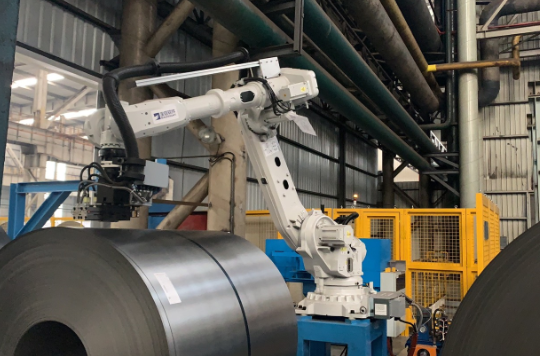
Each strap is processed within 50 seconds, enabling fast entry-process handling.
An unbundling success rate of over 99.5% ensures reliable unbundling.
High-precision positioning within 1 mm precisely identifies the strap tail orientation.
Add-on functions such as end-face defect inspection, coil information verification, label scanning and labeling are supported.
Automatic unbundling (intelligently locating the strap tail while completing tail adjustment and strap cutting), strap recovery (automated extraction, rewinding, transfer and collection for a fully closed loop) and add-on functions (end-face defect inspection, coil information verification, label scanning and labeling) — upgrading production management through data.
Track record: A market leader in unbundling robots for China's metallurgical industry, with over 110 units delivered to users including Baosteel, Guangzhou JFE and Indonesia's Tsingshan Group.
Automatically linked to the L2 system for a fully automatic flow from label printing to precise labeling and verification
Automatically linked to the line L2 system to obtain coil data, it prints labels and picks them up.
The coil outer diameter and width are measured automatically, and after precise labeling the coil number data is verified by scanning.
Add-on functions such as laser engraving on the coil surface, tape application and end-face inspection are supported.
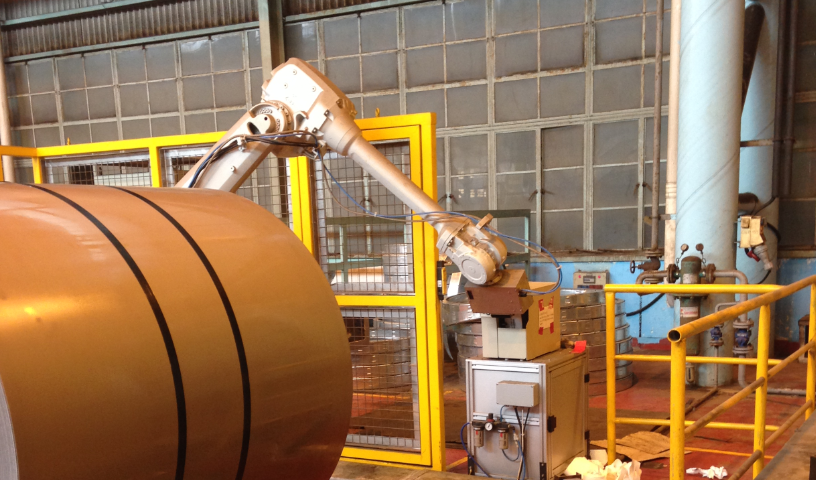
Each label is applied within 30 seconds, improving delivery-end efficiency.
A labeling success rate of over 99.8% eliminates mislabeling and missed labels.
100% information accuracy with reliable synchronization and verification of coil-number data.
Custom add-on functions such as laser engraving, tape application and end-face inspection are available.
Automatically linked to the line L2 system to obtain coil data, it prints and picks up labels on its own; the coil outer diameter and width are measured automatically, and after precise labeling the coil number data is verified by scanning. High-risk manual work is eliminated, mislabeling and missed labels are prevented, and delivery-end labeling efficiency is improved.
Track record: World-class. Over 170 units delivered to users including Baosteel, Guangzhou JFE, Baori and Indonesia's Tsingshan Group.
Core equipment supporting unmanned, standardized and traceable metallurgical lines
An intelligent inline marking system covering every process of metallurgical manufacturing.
Automatically marks coils, slabs, plates, steel pipes, strips and other products, enabling production traceability, logistics tracking and product anti-counterfeiting.
Replacing manual number writing, it is the core equipment for unmanned, standardized and traceable metallurgical lines.
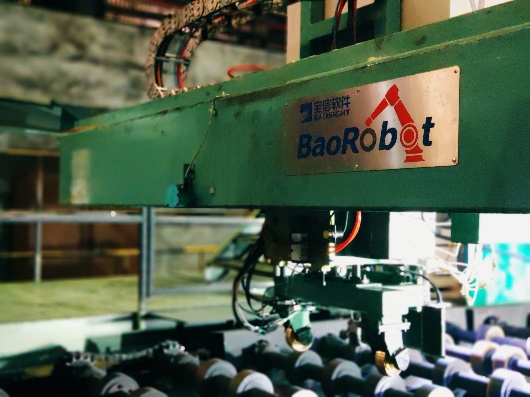
Each row is marked within 20 seconds, improving operating efficiency and cycle stability.
Availability of over 98% ensures stable line operation.
A marking completeness rate of over 99% ensures error-free traceability accuracy.
Customized to user requirements, supporting the intelligent upgrade of production lines.
Characters, QR codes and specification information are marked via automatic inkjet printing, engraving or laser marking; online identification, anti-counterfeiting authentication and full-process information traceability are realized; interlocking with L2/MES systems enables closed-loop data management and tracking; and harsh environments such as high temperature, dust and radiation are tolerated.
Track record: World-class technology with over 260 units delivered. Domestic users include China Baowu Group, Ansteel Group and Jianlong Group; overseas users include Russia's MMK steelworks and Indonesia's Tsingshan Group.
Intelligent unmanned equipment automating the entire logistics chain of shearing → packing → warehousing
Via shuttle cars, conveyor chains and walking-beam conveyors, coils are precisely transferred from the shearing process to the packing line and, once packed, delivered to the finished-goods warehouse.
Automatic wrapping paper/film application, circumferential strapping, radial strapping and outer edge-board fitting fully automate coil protection and packing.
Coordinating with automatic labeling robots for product label printing and application, it synchronizes all coil information and links with the intelligent logistics/warehouse management system.
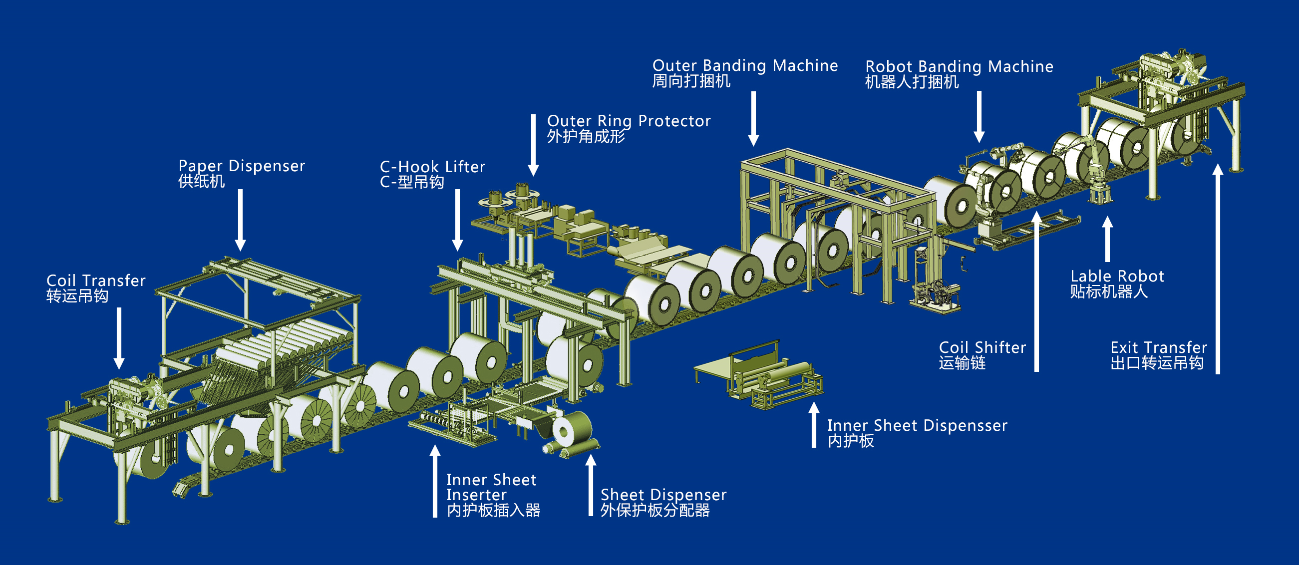
Packs more than 15 coils per hour; continuous operation across the whole line raises throughput.
Circumferential strapping takes no more than 50 seconds per strap, delivering high-speed, high-quality packing.
Radial strapping takes no more than 30 seconds per strap, keeping the packing process efficient and smooth.
Whole-line availability of over 99% ensures stable production.
The fully automatic coil packing line is core intelligent unmanned equipment for the finished-product stage of steel manufacturing. It carries out the protection and packing of coils such as electrical steel after they leave production, connects the shearing and finished-goods warehousing processes, and automates the whole logistics chain of shearing → packing → warehousing in place of manual packing. It lowers production safety risks, cuts labor costs and dependence on manpower, prevents physical damage to coils, and enables intelligent scheduling and optimization.
Track record: China-leading, with 11 lines delivered to users including Shougang, Xinyu Steel, Hongwang and Hongyi.
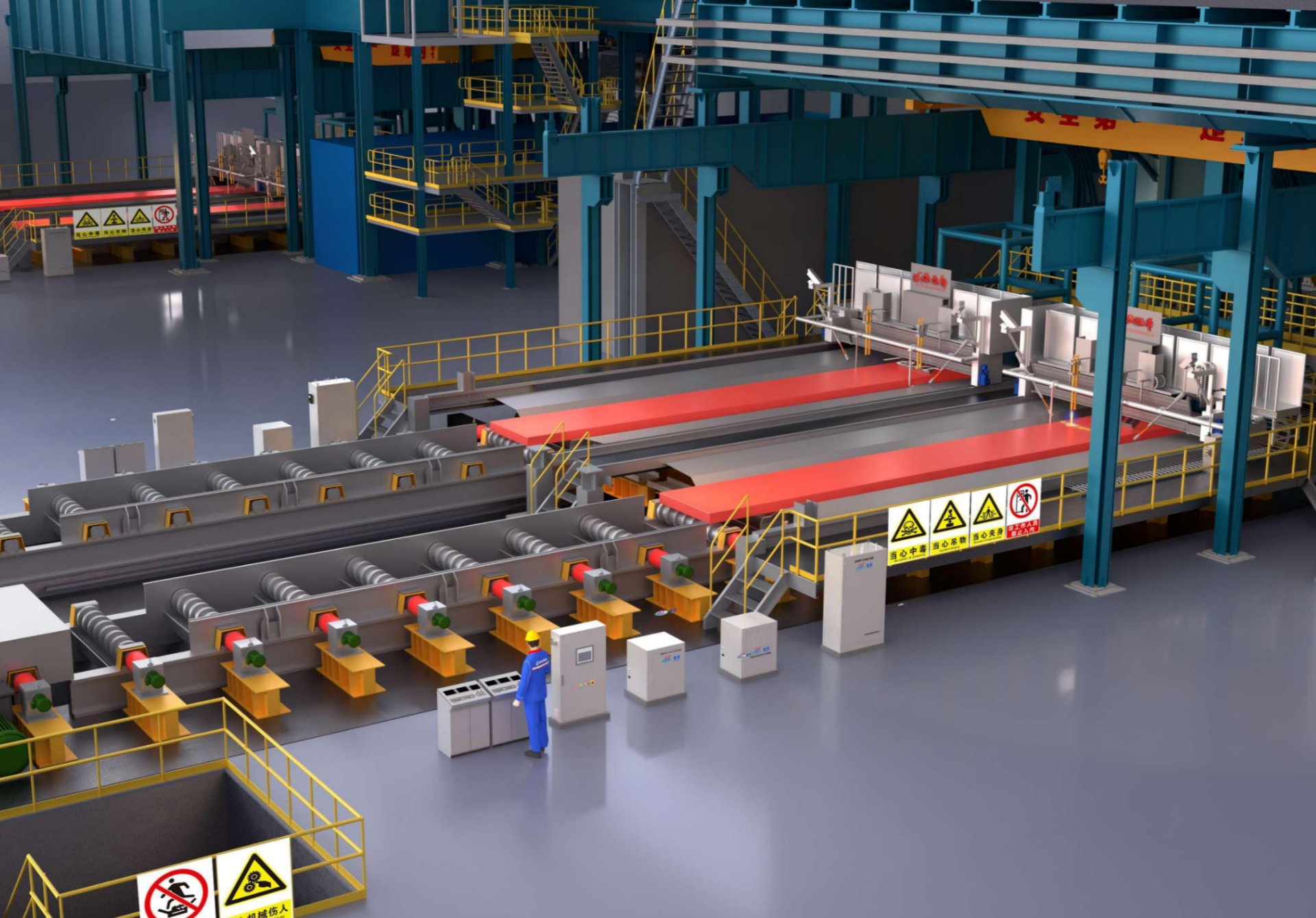
Oxy-hydrogen flame cutting technology | Green cutting solution for continuously cast slabs
Using water as the raw material, oxy-hydrogen mixed gas is generated on site by water electrolysis (produced and used immediately, never stored), replacing fossil gases such as natural gas and propane for energy-saving, low-carbon green cutting of continuously cast slabs.
The system operates below 0.1 MPa and comes standard with leak and overpressure interlocks for high safety. The only combustion product is water, with near-zero smoke and harmful gases, markedly improving the working environment of the continuous casting area.
The product line ranges from HGQ-1000 to HGQ-20000A (gas output 1,000 L/h–20,000 L/h) and accommodates a wide variety of specifications — carbon steel, special steel and stainless steel, as well as continuously cast billets, blooms, slabs and rounds.
Measured fuel costs are about 89% lower than with natural gas (per ton of steel equivalent), substantially reducing operating costs.
Produced and used immediately, operating below 0.1 MPa with standard leak/overpressure interlocks — safe and controllable.
Average kerf width ≤ 4.5 mm and cutting success rate ≥ 99%, with a smooth cut surface, no molten edges and easy cleaning.
CO₂ emissions are reduced by about 0.36 kg/t — up to 8,758 tons per year. The only combustion product is water, and smoke is almost zero.
Designed for the online cutting of continuously cast slabs in the steel industry, it fits blooms, slabs, rounds and other cast types and supports carbon steel, special steel and stainless steel grades. Beyond online continuous-casting cutting, it is also applicable to multi-station heavy-plate cutting, metallurgical heating and other scenarios; the smaller models (HGQ-1000–3000) can additionally be used for precious-metal processing, ampoule sealing and sheet cutting.
Key specifications: Flame temperature: 2,800–3,000 °C. Cutting capacity: rounds up to Φ600 mm, blooms 410 mm, slabs (offline) 530 mm and stainless steel 220 mm. When switching from natural gas, the kerf width narrows by about 40% from 6.5 mm.
Track record: Baosteel Zhanjiang (carbon steel slabs): South Zone No. 3 and No. 4 continuous casters, kerf width ≤ 4.5 mm, cutting success rate ≥ 99%, power consumption < 0.28 kWh/t of steel. HBIS Laoting Tangsteel New Area (blooms): No. 3 and No. 4 casters totaling 13 strands with an annual output of 500,000 tons; 16 HGQ-10000 units installed. Inner Mongolia Baotou Steel: 6 production lines revamped since 2013 with 89 units installed cumulatively, cutting overall operating costs by 61.5%.